Advancing Sustainable Logistics and Transport Systems in Free Trade Zones: A Multi-Criteria Decision-Making Approach for Strategic Sustainable Development
DOI:
https://doi.org/10.59543/ijsdg.v1i.14213Keywords:
Free trade zones; Sustainable logistics; Multi-Criteria Decision-Making; MARCOS; Fuzzy Simple Weight Calculation; Sustainable Development Goals.Abstract
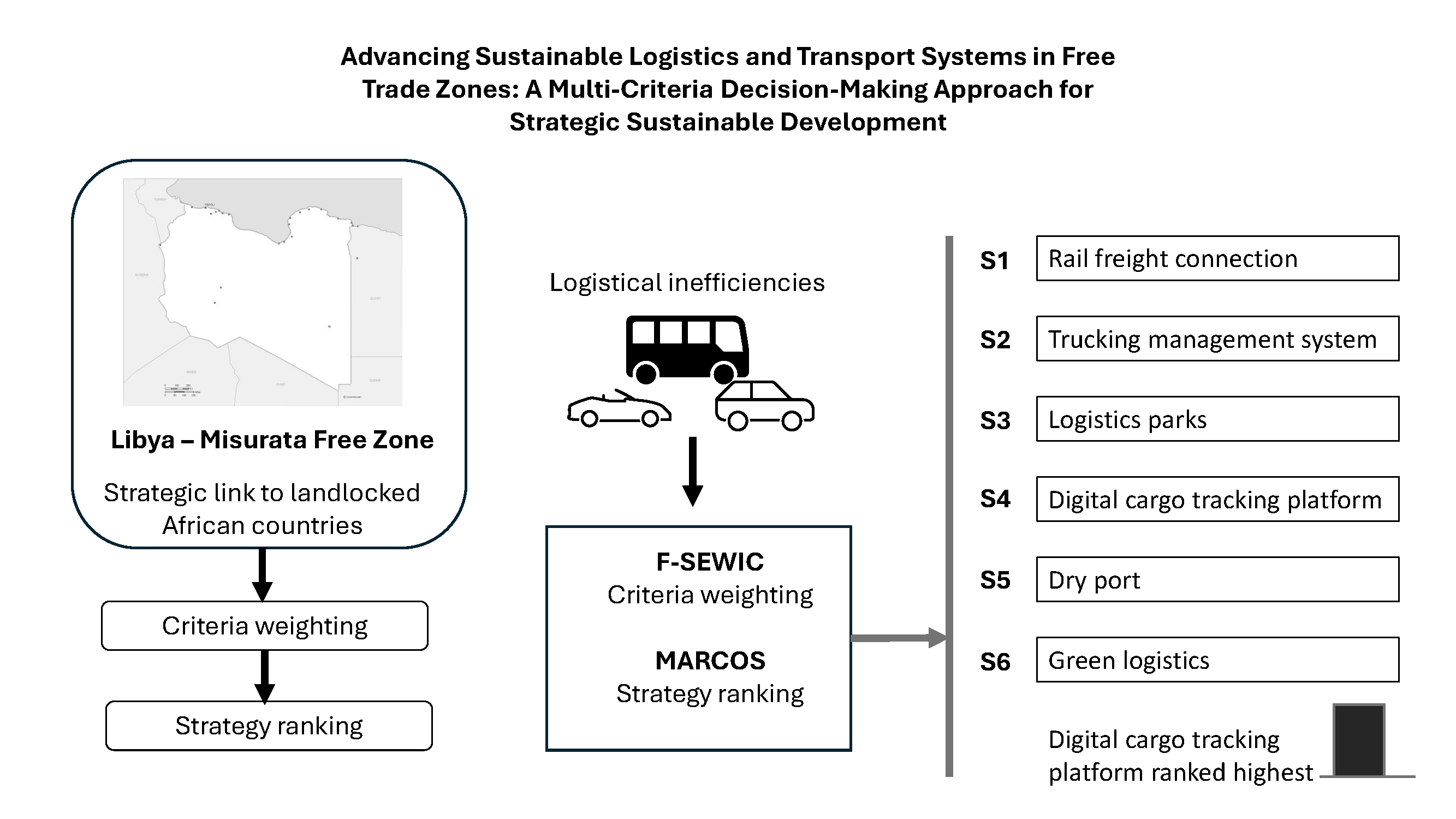
Efficient and sustainable logistics and transportation systems are essential for the success of Free Trade Zones (FTZs), especially in developing regions striving to achieve the Sustainable Development Goals (SDGs). Libya, due to its strategic Mediterranean location and proximity to landlocked African nations, presents a strong case for establishing itself as a regional logistics gateway through the Misurata Free Zone (MFZ). This study proposes an integrated Multi-Criteria Decision-Making (MCDM) model to support SDG-aligned logistics and infrastructure development in MFZ. The Fuzzy Simple Weight Calculation (F-SEWIC) method was used to prioritize seven sustainability-focused criteria, including environmental impact, resilience, economic feasibility, and stakeholder inclusiveness. The Measurement of Alternatives and Ranking according to Compromise Solution (MARCOS) method was then applied to assess six strategic development alternatives. Results identified the implementation of a digital cargo tracking platform as the most impactful and sustainable option, followed by the development of green logistics parks and coordinated trucking systems. This research provides a transparent and replicable decision-support model to aid governments, stakeholders, and international development organizations in planning FTZ logistics systems that are efficient, inclusive, and environmentally responsible—supporting SDG 9, SDG 11, and SDG 17.