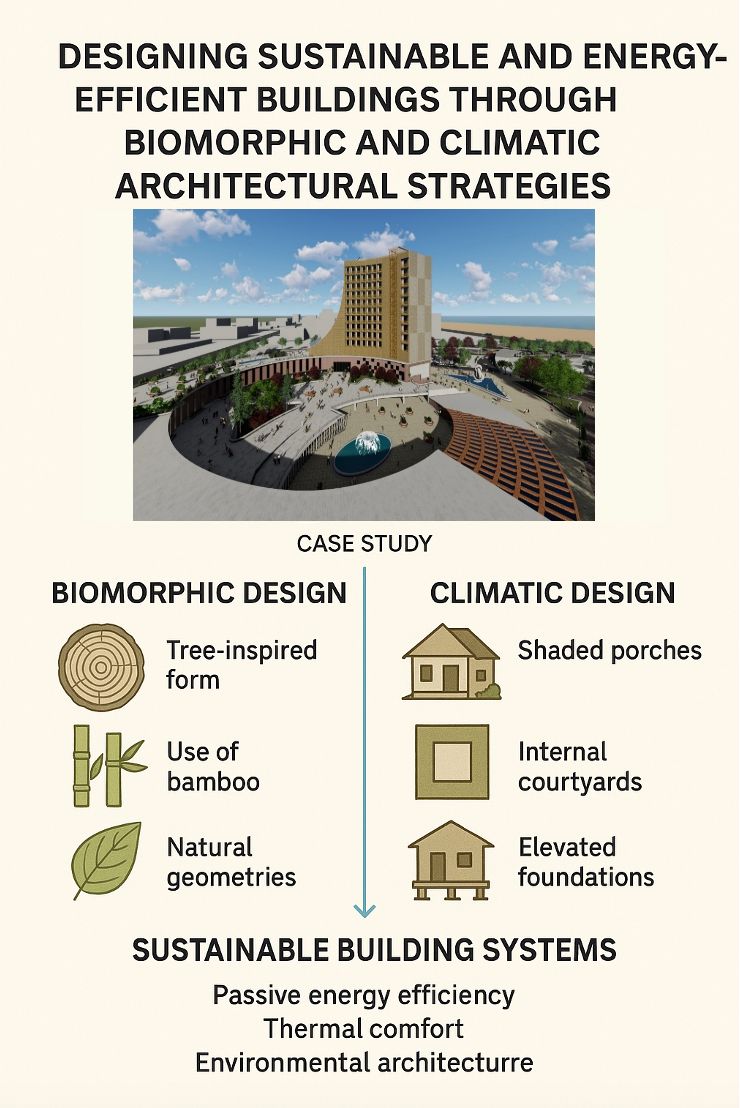
Designing Sustainable and Energy-Efficient Buildings through Biomorphic and Climatic Architectural Strategies
DOI:
https://doi.org/10.59543/ijsdg.v1i.14691Keywords:
Biomorphic architecture; Climatic design strategies; Sustainable building systems; Passive energy efficiency; Thermal comfort; Environmental architecture; Sustainable Development GoalsAbstract
The urgent need for sustainable, energy-efficient, and environmentally responsive buildings has intensified in the face of global climate challenges. This study presents an integrative architectural approach that synthesizes biomorphic and climatic design principles to create energy-efficient structures with minimal ecological impact. A hotel building—serving both residential and recreational functions—is proposed as a case study to demonstrate this dual methodology. The biomorphic design draws inspiration from the growth patterns and natural geometries of trees, incorporating tree trunk cross-sections and bamboo as central elements in both structural planning and façade articulation. Complementarily, climatic design strategies integrate vernacular elements such as shaded porches, internal courtyards, elevated foundations, and regionally appropriate materials to enhance thermal performance. These features promote natural ventilation, reduce reliance on artificial heating and cooling systems, and improve daylight utilization, thereby lowering energy consumption and environmental impact. The resulting architectural framework underscores the potential of bio-inspired and climate-adaptive design strategies in achieving the Sustainable Development Goals. It offers a replicable model for architects and policymakers seeking to develop resilient and livable built environments in a warming world.